

Why PP Turf Is Not The Best Choice For Commercial Golf Hitting Mats
For golf hitting mats, material choice should depend on the real usage scenario. PP turf can be used in some budget-friendly or light-use products, but for commercial use, B2B buyers should not expect too much from PP material in the core hitting area.
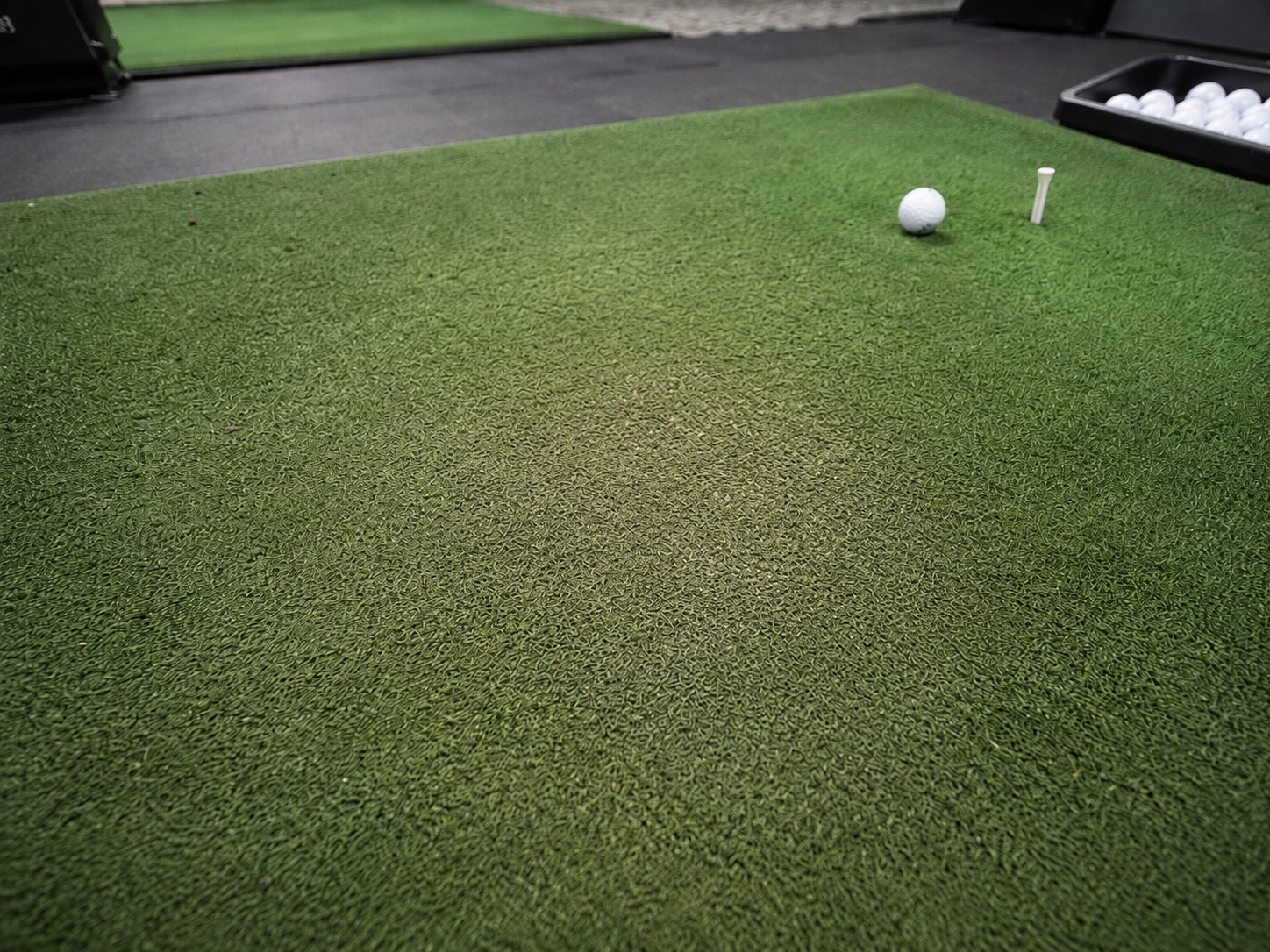
Example of visible surface wear and flattening on a golf practice mat after repeated commercial use.
PP turf is not useless. It has its value in cost control and light-use areas. But for commercial golf practice mats, driving range mats, and high-frequency hitting zones, nylon turf is usually a more suitable first choice.
Why We Do Not Suggest High Expectations For PP Turf
PP turf is often selected because it helps reduce product cost. This is understandable, especially for price-sensitive projects. However, commercial golf mats are different from light home-use products.
In commercial environments, the mat may be used many times every day. The hitting area receives repeated club impact, foot pressure, friction, and continuous training use. Under this kind of condition, the material in the core hitting area needs stronger wear resistance and better long-term stability.
If PP turf is used as the main material in a high-wear commercial area, visible usage marks, flattening, surface changes, or faster wear may appear earlier than expected. This does not always mean the factory made a defective product. In many cases, it means the material was used in a position that requires higher performance.
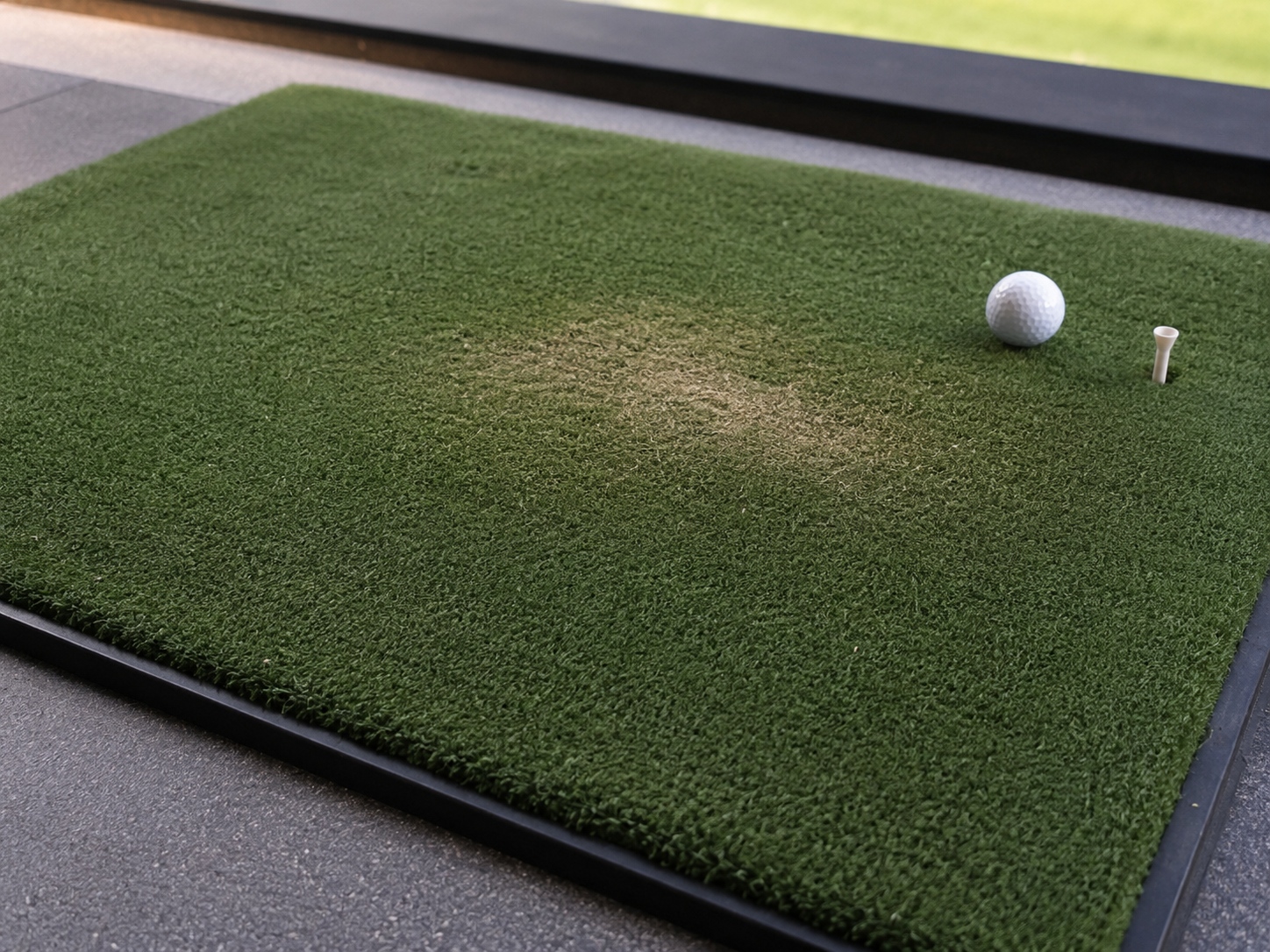
Commercial golf mats may show wear not only in the hitting area, but also in the standing area where users repeat the same movement every day.
The problem is not that customers choose a budget material. The real problem is using a budget material in a commercial high-wear position, while expecting it to perform like a higher-wear-resistant material.
Commercial Use And Light Use Are Not The Same
A golf practice mat used occasionally at home is very different from a mat used in a driving range, golf simulator room, golf academy, coaching studio, or commercial training area.
For light use, PP turf may still be a reasonable option if the customer understands its application range. It can be used for budget products, non-core areas, display areas, or lower-frequency practice situations.
But for B2B customers and commercial projects, the decision should be more careful. A commercial mat is not only judged by the first purchase price. It is also judged by durability, customer experience, after-sales risk, replacement frequency, and long-term trust.
Why Nylon Turf Is Often A Better First Choice For Commercial Hitting Areas
For the core hitting area of a commercial golf mat, nylon turf is often considered a better first choice because this position needs to handle repeated impact and friction.
This does not mean every part of the product must use nylon. A good golf mat can use different materials in different positions. For example, the main hitting area can use a more wear-resistant material, while non-core areas can use a more cost-friendly solution.
This kind of material matching is more practical for B2B buyers. It helps balance cost, durability, product positioning, and customer satisfaction.
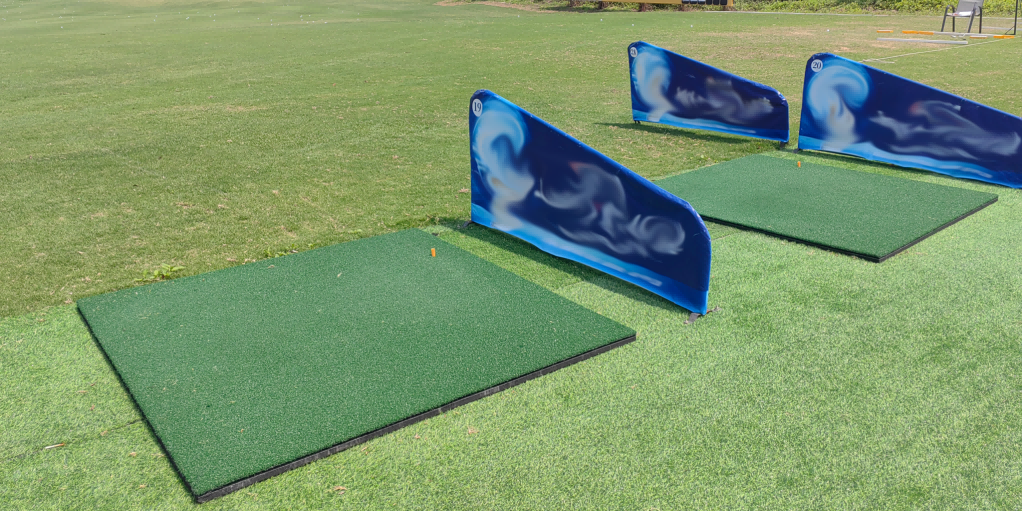
For commercial hitting areas, nylon turf is often a better option because it is more suitable for repeated impact and higher-wear conditions.
Before Choosing PP Turf For Commercial Use, Please Check These Points
- Will the mat be used every day?
- Is this area the main hitting position?
- Will the surface receive repeated club impact?
- Is the customer sensitive to visible wear marks?
- Is the project for home use or commercial use?
- Is the buyer comparing materials under the same price, structure, and usage condition?
- Would nylon turf be a better option for the high-wear area?
Be Careful With Survivorship Bias In Material Comparison
When customers compare products, they may sometimes hear that another supplier's mat performs better. But before making a conclusion, it is important to check whether the comparison is fair.
Is the other product also using PP turf in the same hitting area? Is the price level the same? Is the structure the same? Is the usage frequency the same? Does the competitor use nylon or another material in the high-wear position?
If these details are not checked, the comparison may create survivorship bias. Customers may only see the successful case, but not the failed low-cost PP cases. They may also compare a PP hitting area with another product that actually uses a stronger material in the core position.
That is why we do not suggest judging a golf mat only by surface appearance. Two mats may look similar, but the material, density, backing, structure, and hitting area design can be very different.
Cost Control Is Important, But Wrong Material Choice Can Create Higher Cost Later
In recent years, material cost and production cost have continued to affect golf mat manufacturing. At the same time, many markets still expect stable or lower product prices. This makes material selection more important than before.
PP turf can help control the initial product cost. But if it is used in the wrong position, especially in a commercial hitting area, the later cost may become higher through complaints, replacement, customer dissatisfaction, and loss of trust.
For commercial buyers, the better decision is not always choosing the lowest price. The better decision is choosing a material structure that matches the real usage condition.
For commercial golf hitting mats, driving range mats, simulator mats, and high-frequency practice mats, we suggest using nylon turf or a more wear-resistant material in the core hitting area. PP turf can still be considered for budget products or non-core positions, but it should not carry unrealistic durability expectations.
How To Avoid Material Selection Problems
Before confirming an order, buyers should clearly define the usage scenario. A supplier should also explain the material position honestly, instead of only focusing on price.
If the project is for light use, limited budget, or non-core areas, PP turf can be discussed. If the project is for commercial practice, frequent hitting, or long-term customer use, nylon turf should be evaluated as the priority option for the main hitting area.
This is not about saying one material is always good and another material is always bad. It is about placing the right material in the right position.
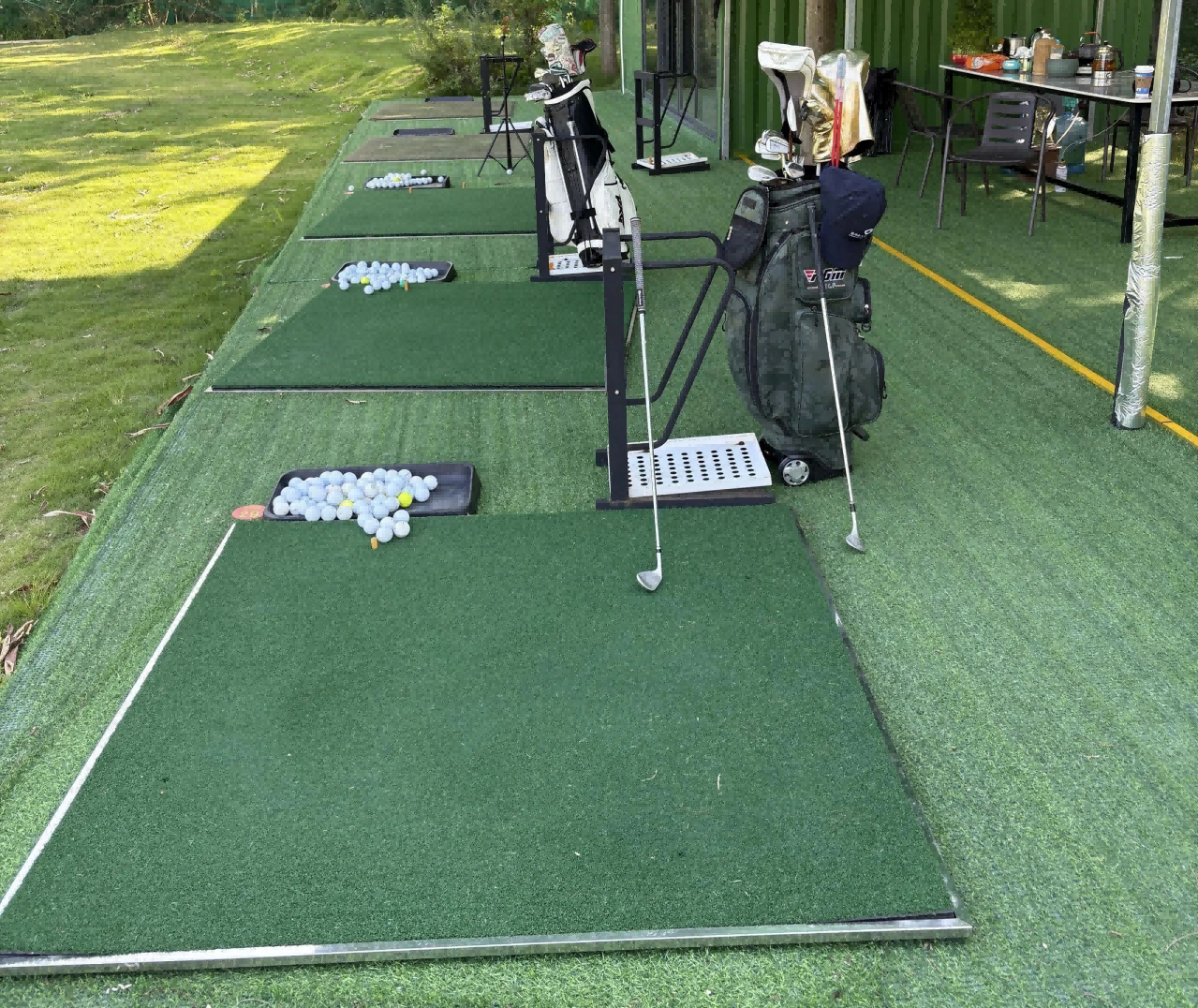
Commercial golf practice environments need material choices that match real frequency, real wear, and real customer expectations.
If you are choosing golf hitting mats, golf practice mats, golf simulator mats, or driving range mats for commercial use, we can help evaluate the right material structure based on your usage frequency, target market, budget, and durability requirements.